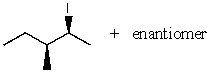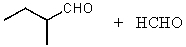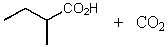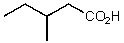
Filters
Question type

Study Flashcards

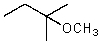
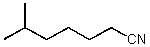
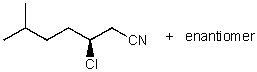
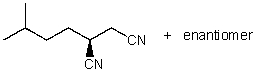
What is the major product for the following reaction? What is the major product for the following reaction?   A)    B)    C)    D)    E)  More than one of the above


A)
What is the major product for the following reaction?   A)    B)    C)    D)    E)  More than one of the above
B)
What is the major product for the following reaction?   A)    B)    C)    D)    E)  More than one of the above
C)
What is the major product for the following reaction?   A)    B)    C)    D)    E)  More than one of the above
D)
What is the major product for the following reaction?   A)    B)    C)    D)    E)  More than one of the above
E) More than one of the above

F) D) and E)
G) B) and D)

Correct Answer

verifed

verified

What is the major product for the following reaction? What is the major product for the following reaction?   A)    B)    C)    D)    E)  More than one of the above


A)
What is the major product for the following reaction?   A)    B)    C)    D)    E)  More than one of the above
B)
What is the major product for the following reaction?   A)    B)    C)    D)    E)  More than one of the above
C)
What is the major product for the following reaction?   A)    B)    C)    D)    E)  More than one of the above
D)
What is the major product for the following reaction?   A)    B)    C)    D)    E)  More than one of the above
E) More than one of the above

F) A) and B)
G) D) and E)

Correct Answer

verifed

verified

(R) -3-Chloro-1-butene reacts with HCl by Markovnikov addition,and the products are separated by gas chromatography.How many total fractions would be obtained and how many would be optically active?


A) One optically active fraction only
B) One optically active fraction and one optically inactive
C) Two optically active fractions
D) One optically active fraction and two optically inactive
E) Two optically active fractions and one optically inactive

F) A) and B)
G) A) and E)

Correct Answer

verifed

verified

Which of the following could be used as the basis for a simple test that would distinguish between 1-pentyne and pentane?


A) IR examination
B) Br2/CCl4
C) KMnO4/H2O
D) Two of these
E) All of these

F) A) and B)
G) A) and E)

Correct Answer

verifed

verified

The interaction of the π\pi bond of an alkene with an electrophile can initially result in the formation of a species termed a π\pi complex.Which of these cannot combine with an alkene to form a π\pi complex?


A) H+
B) NH3
C) Ag+
D) Hg2+
E) BF3

F) A) and E)
G) A) and D)

Correct Answer

verifed

verified

Acid-catalyzed hydration of 2-methyl-1-butene would yield which of the following?


A) (CH3) 2C(OH) CH2CH3
B) CH2OHCH(CH3) CH2CH3
C) (CH3) 2CHCHOHCH3
D) (CH3) 2CHCH2CH2OH
E) CH3CH2CH(CH3) CH2OH

F) C) and D)
G) A) and B)

Correct Answer

verifed

verified

What is the major product of the following reaction sequence? What is the major product of the following reaction sequence?   A)    B)    C)    D)    E)


A)
What is the major product of the following reaction sequence?   A)    B)    C)    D)    E)
B)
What is the major product of the following reaction sequence?   A)    B)    C)    D)    E)
C)
What is the major product of the following reaction sequence?   A)    B)    C)    D)    E)
D)
What is the major product of the following reaction sequence?   A)    B)    C)    D)    E)
E)
What is the major product of the following reaction sequence?   A)    B)    C)    D)    E)

F) A) and B)
G) None of the above

Correct Answer

verifed

verified

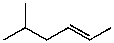
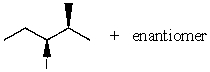
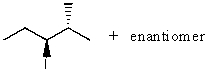
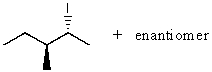
Draw Fischer projection formulas of the major product of the reaction between E-2-methyl-3-hexene and aqueous Br2.

Correct Answer

verifed

verified

blured image The reaction takes place with anti ster...

View Answer

What is the chief product of the reaction of IBr with 2-methyl-2-pentene?


A) 2-bromo-3-iodo-2-methylpentane
B) 3-bromo-2-iodo-2-methylpentane
C) 1-bromo-2-iodo-2-methylpentane
D) 2-bromo-1-iodo-2-methylpentane
E) All of the above

F) C) and D)
G) B) and E)

Correct Answer

verifed

verified

Which of these compounds will react with cold concd.H2SO4,as well as Br2 in CCl4 ?


A) CH3CH2CH=CHCH3
B) CH3CH2CH2CH=CH2
C) CH3CH2C \equiv CCH3
D) (CH3) 2CHC \equiv CH
E) All of these

F) A) and E)
G) A) and B)

Correct Answer

verifed

verified

The reaction of BrCl (bromine monochloride) with 1-methylcyclopentene will produce as the predominant product: The reaction of BrCl (bromine monochloride) with 1-methylcyclopentene will produce as the predominant product:   A)  I B)  II C)  III D)  IV E)  V


A) I
B) II
C) III
D) IV
E) V

F) C) and D)
G) A) and D)

Correct Answer

verifed

verified

Which of the following reactions of cyclobutene would yield a meso product?


A) Reaction with H3O+,H2O
B) Reaction with Br2,CCl4
C) Reaction with Cl2,CCl4
D) Reaction with D2,Pt
E) Reaction with hot,alkaline KMnO4,followed by acid workup

F) A) and E)
G) A) and C)

Correct Answer

verifed

verified

An unknown compound,A,has the molecular formula C7H12.On oxidation with hot aqueous potassium permanganate,A yields CH3CH2COOH and (CH3) 2CHCOOH.Which of the following structures best represents A?


A)
An unknown compound,A,has the molecular formula C<sub>7</sub>H<sub>12</sub>.On oxidation with hot aqueous potassium permanganate,A yields CH<sub>3</sub>CH<sub>2</sub>COOH and (CH<sub>3</sub>) <sub>2</sub>CHCOOH.Which of the following structures best represents A? A)    B)    C)    D)    E)
B)
An unknown compound,A,has the molecular formula C<sub>7</sub>H<sub>12</sub>.On oxidation with hot aqueous potassium permanganate,A yields CH<sub>3</sub>CH<sub>2</sub>COOH and (CH<sub>3</sub>) <sub>2</sub>CHCOOH.Which of the following structures best represents A? A)    B)    C)    D)    E)
C)
An unknown compound,A,has the molecular formula C<sub>7</sub>H<sub>12</sub>.On oxidation with hot aqueous potassium permanganate,A yields CH<sub>3</sub>CH<sub>2</sub>COOH and (CH<sub>3</sub>) <sub>2</sub>CHCOOH.Which of the following structures best represents A? A)    B)    C)    D)    E)
D)
An unknown compound,A,has the molecular formula C<sub>7</sub>H<sub>12</sub>.On oxidation with hot aqueous potassium permanganate,A yields CH<sub>3</sub>CH<sub>2</sub>COOH and (CH<sub>3</sub>) <sub>2</sub>CHCOOH.Which of the following structures best represents A? A)    B)    C)    D)    E)
E)
An unknown compound,A,has the molecular formula C<sub>7</sub>H<sub>12</sub>.On oxidation with hot aqueous potassium permanganate,A yields CH<sub>3</sub>CH<sub>2</sub>COOH and (CH<sub>3</sub>) <sub>2</sub>CHCOOH.Which of the following structures best represents A? A)    B)    C)    D)    E)

F) B) and C)
G) A) and E)

Correct Answer

verifed

verified

What is the major product of the following reaction sequence? What is the major product of the following reaction sequence?   A)    B)    C)    D)    E)  More than one of the above


A)
What is the major product of the following reaction sequence?   A)    B)    C)    D)    E)  More than one of the above
B)
What is the major product of the following reaction sequence?   A)    B)    C)    D)    E)  More than one of the above
C)
What is the major product of the following reaction sequence?   A)    B)    C)    D)    E)  More than one of the above
D)
What is the major product of the following reaction sequence?   A)    B)    C)    D)    E)  More than one of the above
E) More than one of the above

F) B) and E)
G) B) and C)

Correct Answer

verifed

verified

What is the major product of the following reaction sequence? What is the major product of the following reaction sequence?   A)    B)    C)    D)    E)  None of the above


A)
What is the major product of the following reaction sequence?   A)    B)    C)    D)    E)  None of the above
B)
What is the major product of the following reaction sequence?   A)    B)    C)    D)    E)  None of the above
C)
What is the major product of the following reaction sequence?   A)    B)    C)    D)    E)  None of the above
D)
What is the major product of the following reaction sequence?   A)    B)    C)    D)    E)  None of the above
E) None of the above

F) C) and E)
G) A) and D)

Correct Answer

verifed

verified

An alkene with the molecular formula C10H18 is treated with ozone and then with zinc and acetic acid.The only product isolated from these reactions is: An alkene with the molecular formula C<sub>10</sub>H<sub>18</sub> <sub> </sub>is treated with ozone and then with zinc and acetic acid.The only product isolated from these reactions is:   What is the structure of the alkene?   A)  I B)  II C)  III D)  IV E)  V What is the structure of the alkene? An alkene with the molecular formula C<sub>10</sub>H<sub>18</sub> <sub> </sub>is treated with ozone and then with zinc and acetic acid.The only product isolated from these reactions is:   What is the structure of the alkene?   A)  I B)  II C)  III D)  IV E)  V


A) I
B) II
C) III
D) IV
E) V

F) B) and E)
G) C) and D)

Correct Answer

verifed

verified

What is the major product for the following reaction? What is the major product for the following reaction?   A)    B)    C)    D)    E)


A)
What is the major product for the following reaction?   A)    B)    C)    D)    E)
B)
What is the major product for the following reaction?   A)    B)    C)    D)    E)
C)
What is the major product for the following reaction?   A)    B)    C)    D)    E)
D)
What is the major product for the following reaction?   A)    B)    C)    D)    E)
E)
What is the major product for the following reaction?   A)    B)    C)    D)    E)

F) C) and D)
G) A) and B)

Correct Answer

verifed

verified

What is the final product of the following synthesis? What is the final product of the following synthesis?   A)  I B)  II C)  III D)  IV E)  An equimolar mixture of III and IV


A) I
B) II
C) III
D) IV
E) An equimolar mixture of III and IV

F) A) and B)
G) A) and C)

Correct Answer

verifed

verified

One mole of an optically active compound,X,with the molecular formula C6H8 reacts with three moles of hydrogen in the presence of a catalyst to yield an optically inactive product that cannot be resolved.X also exhibits IR absorption at approximately 3300 cm-1.Which is a possible structure for X?


A) (E) -4-hexen-1-yne
B) (Z) -4-hexen-1-yne
C) (E) -2-hexen-4-yne
D) 2-methyl-1-penten-3-yne
E) 3-methyl-1-penten-4-yne

F) A) and D)
G) A) and C)

Correct Answer

verifed

verified

What is the major product for the following reaction? What is the major product for the following reaction?   A)    B)    C)    D)    E)  None of the above


A)
What is the major product for the following reaction?   A)    B)    C)    D)    E)  None of the above
B)
What is the major product for the following reaction?   A)    B)    C)    D)    E)  None of the above
C)
What is the major product for the following reaction?   A)    B)    C)    D)    E)  None of the above
D)
What is the major product for the following reaction?   A)    B)    C)    D)    E)  None of the above
E) None of the above

F) C) and E)
G) A) and D)

Correct Answer

verifed

verified

Showing 121 - 140 of 140

Related Exams

Show Answer